


Production process
of welded pipes/profiles
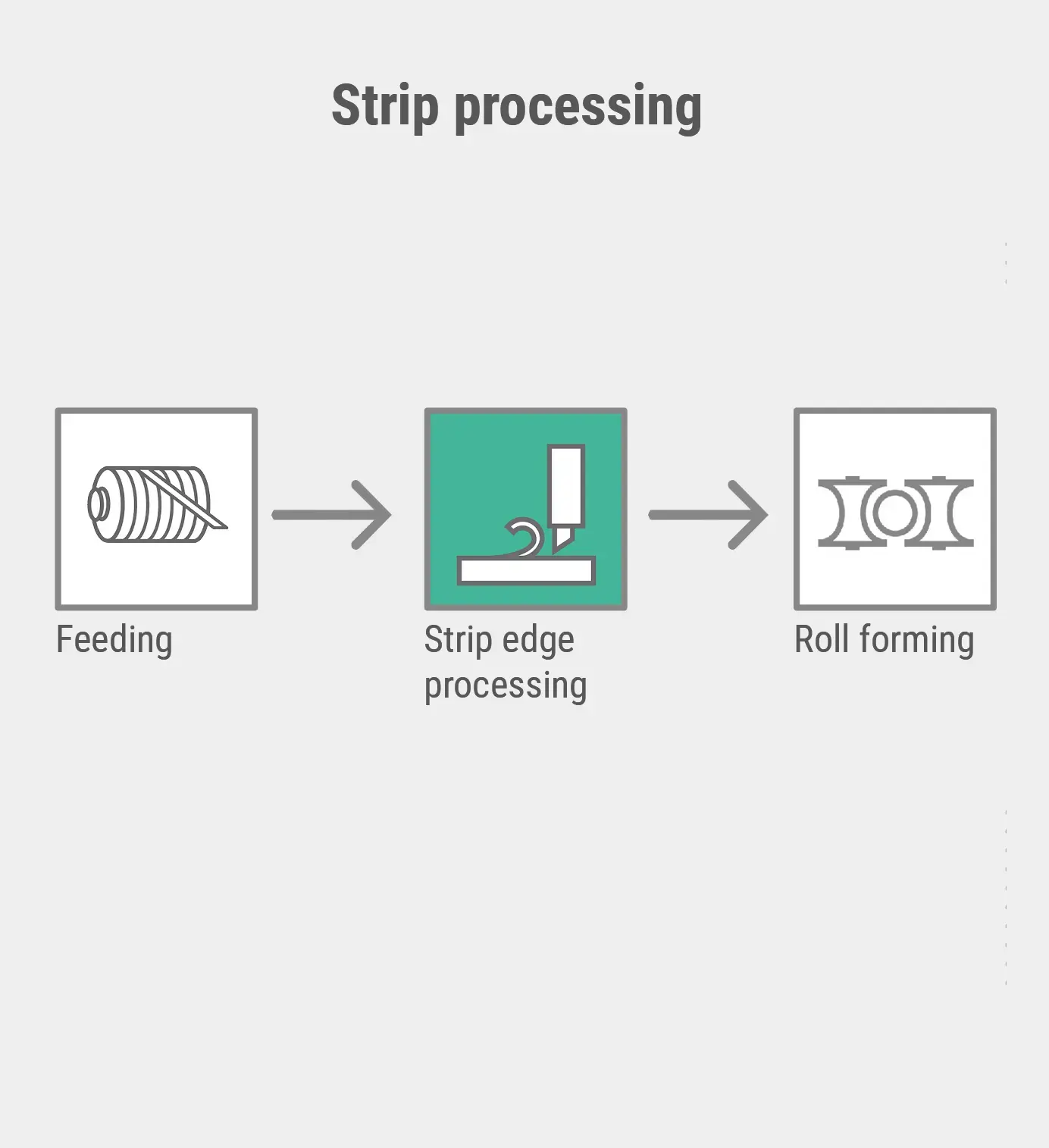
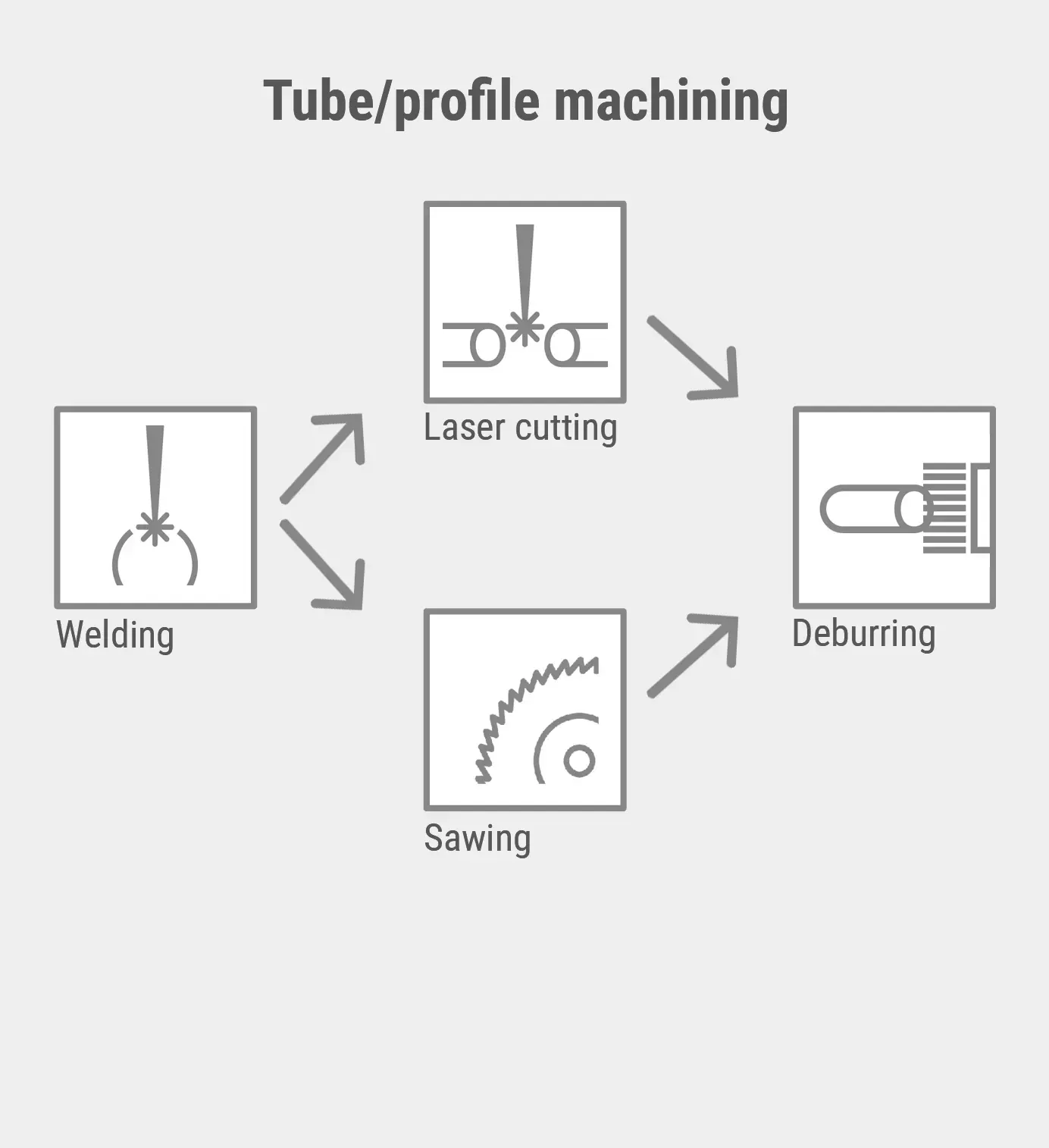
At the core of the product range is the processing by metal-cutting of the strip edges for weld seam preparation.
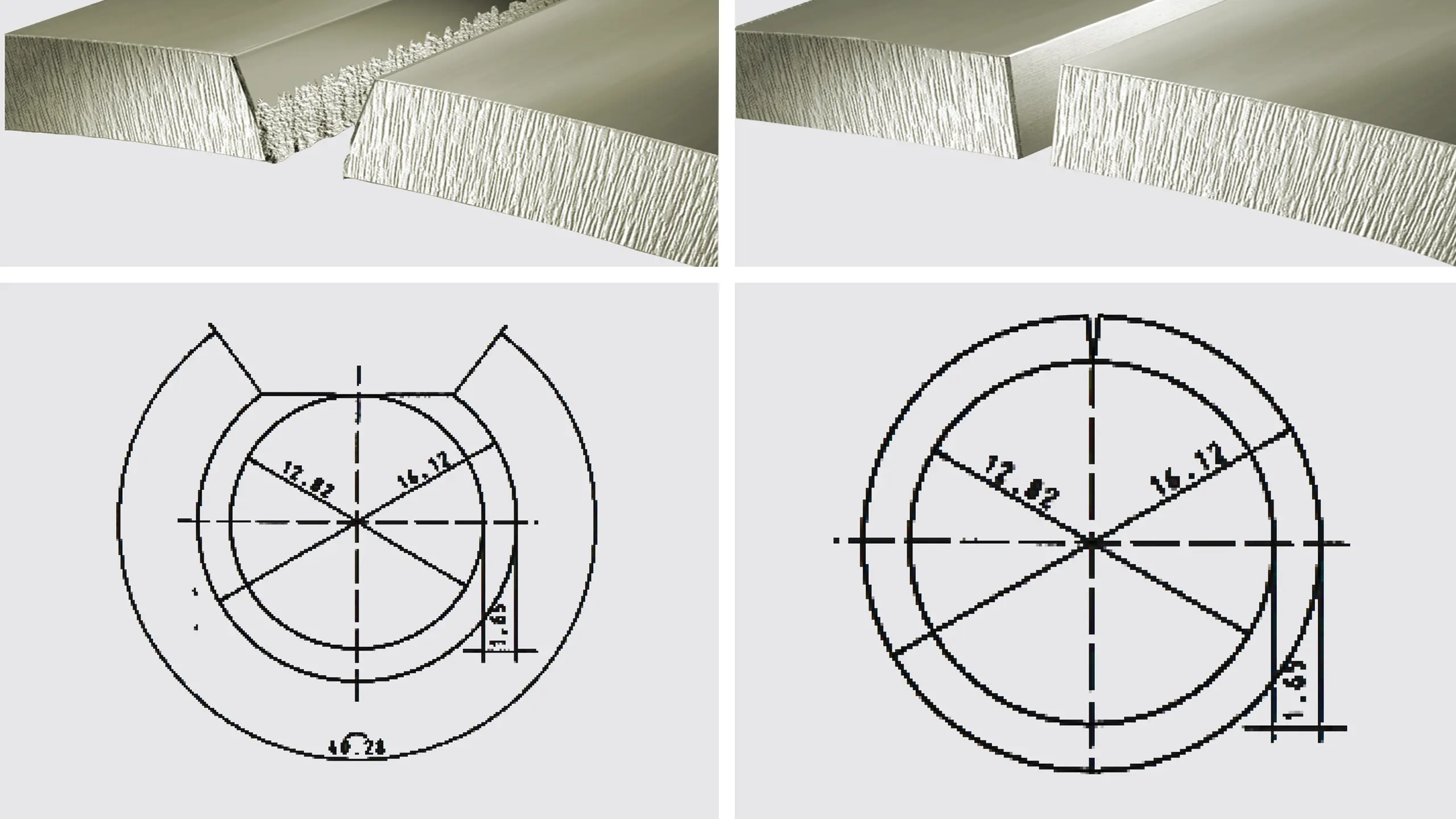
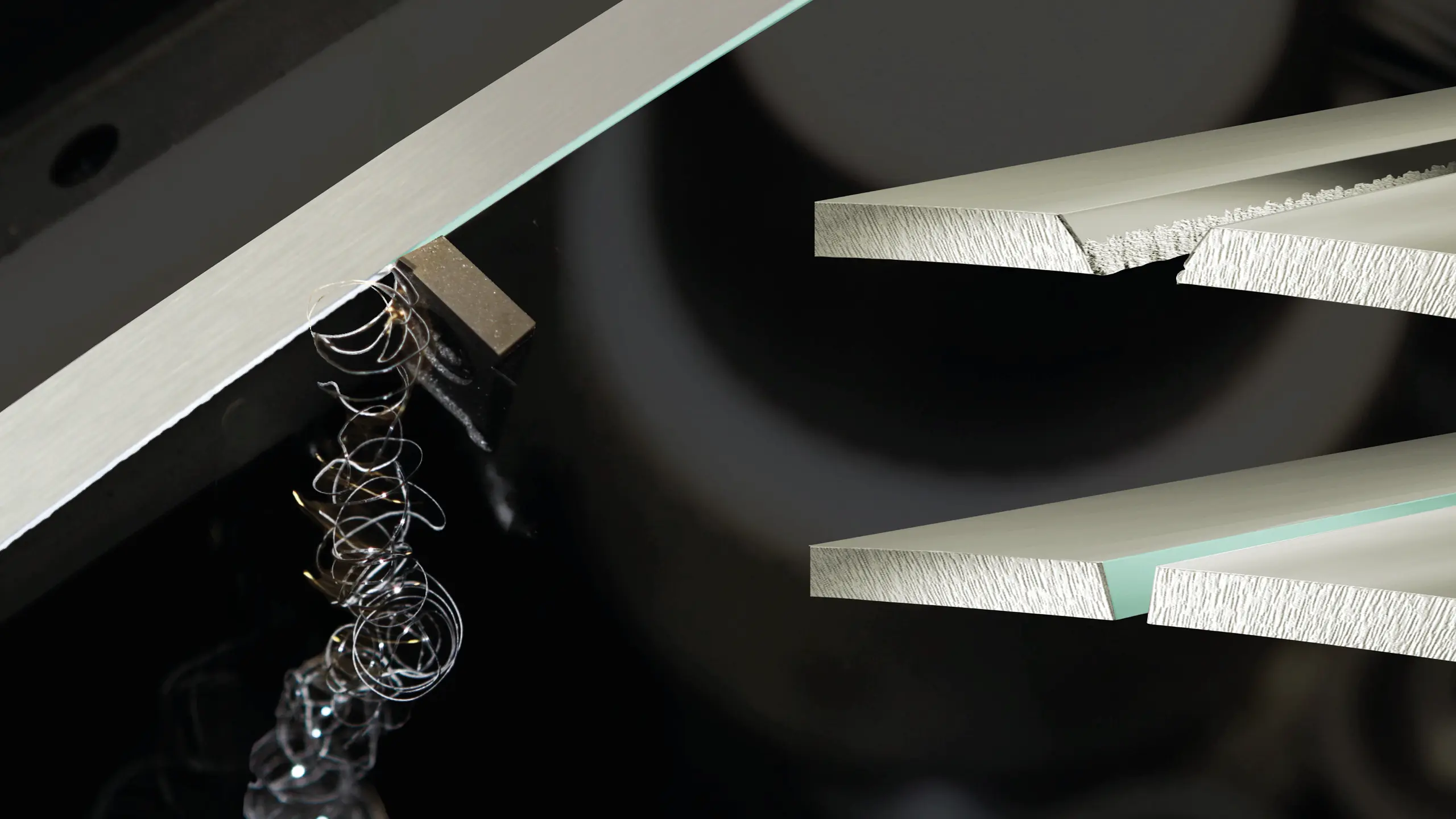
Without strip edge trimming
The starting strip material is usually longitudinally cut strip (slit strip). The edges are only cut really cleanly to <35%, the larger proportion is broken off at an angle and not clean, i.e. irregular in terms of straightness, angle and structure, and coatings may interfere with welding.
The thicker the wall thickness and the smaller the pipe diameter, the greater the V-angle at which the round pipe edges meet. The cross-section to be welded, which abuts against each other, becomes smaller and smaller and therefore the area to be liquefied necessarily becomes larger.
This also means that the upsetting zone, and therefore the upsetting force, increases immediately after welding. This results in ever-increasing weld seam elevations, which have to be planed off at great expense on the upper and inner surfaces.
Weld seam optimization with edge processing
The belt edges are evenly clean and straight and also retain their inner structure on the surface.
The edges are processed at an adjustable angle so that the V-angle for welding is reduced and coatings on the belt edge are removed.
The colliding cross-section of the edges is maximized so that a smaller volume of material has to be liquefied.
- Less energy consumption
- Higher welding speed
- More homogeneous weld seam structure = improved quality
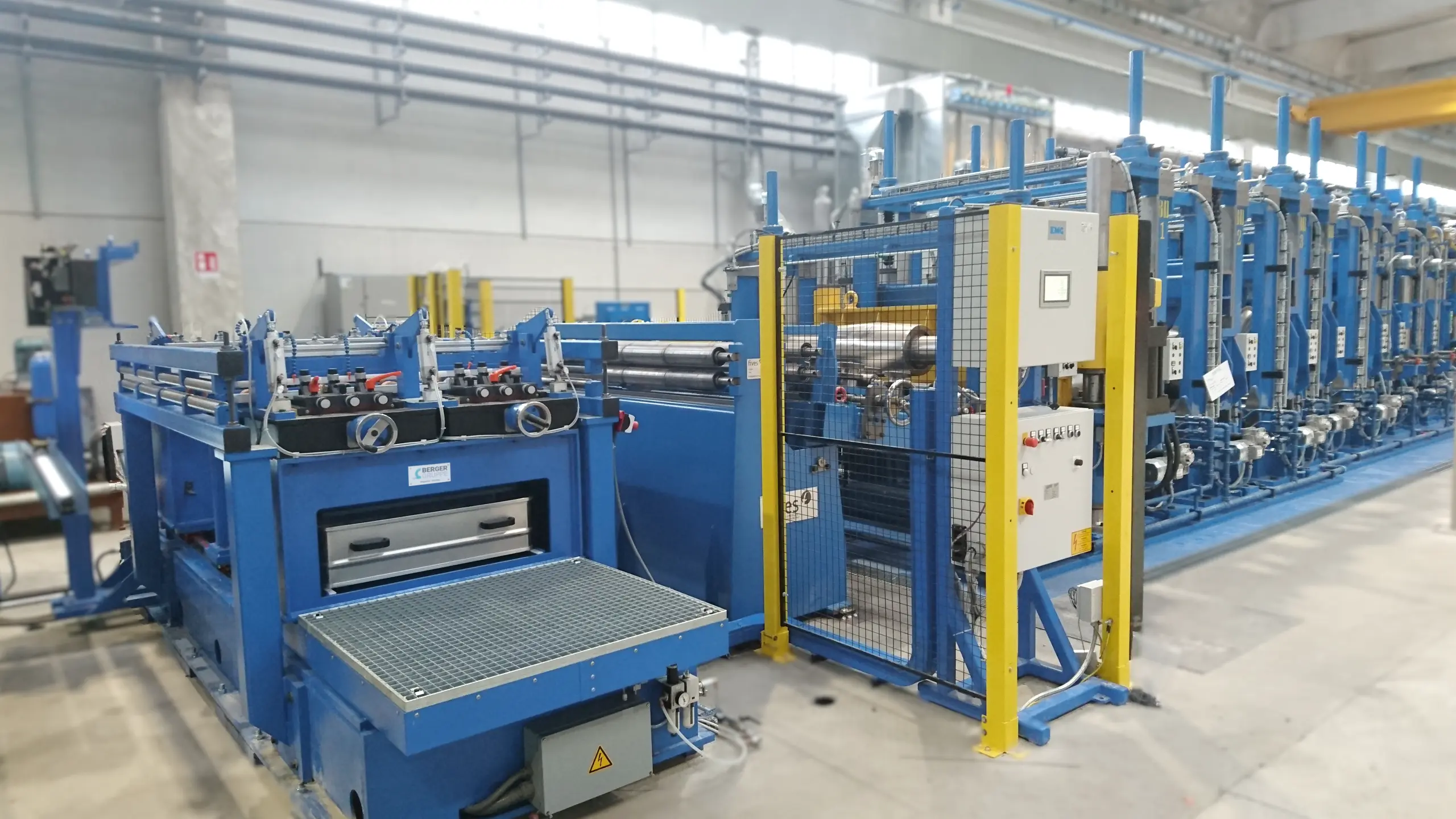
Integration in pipe welding lines
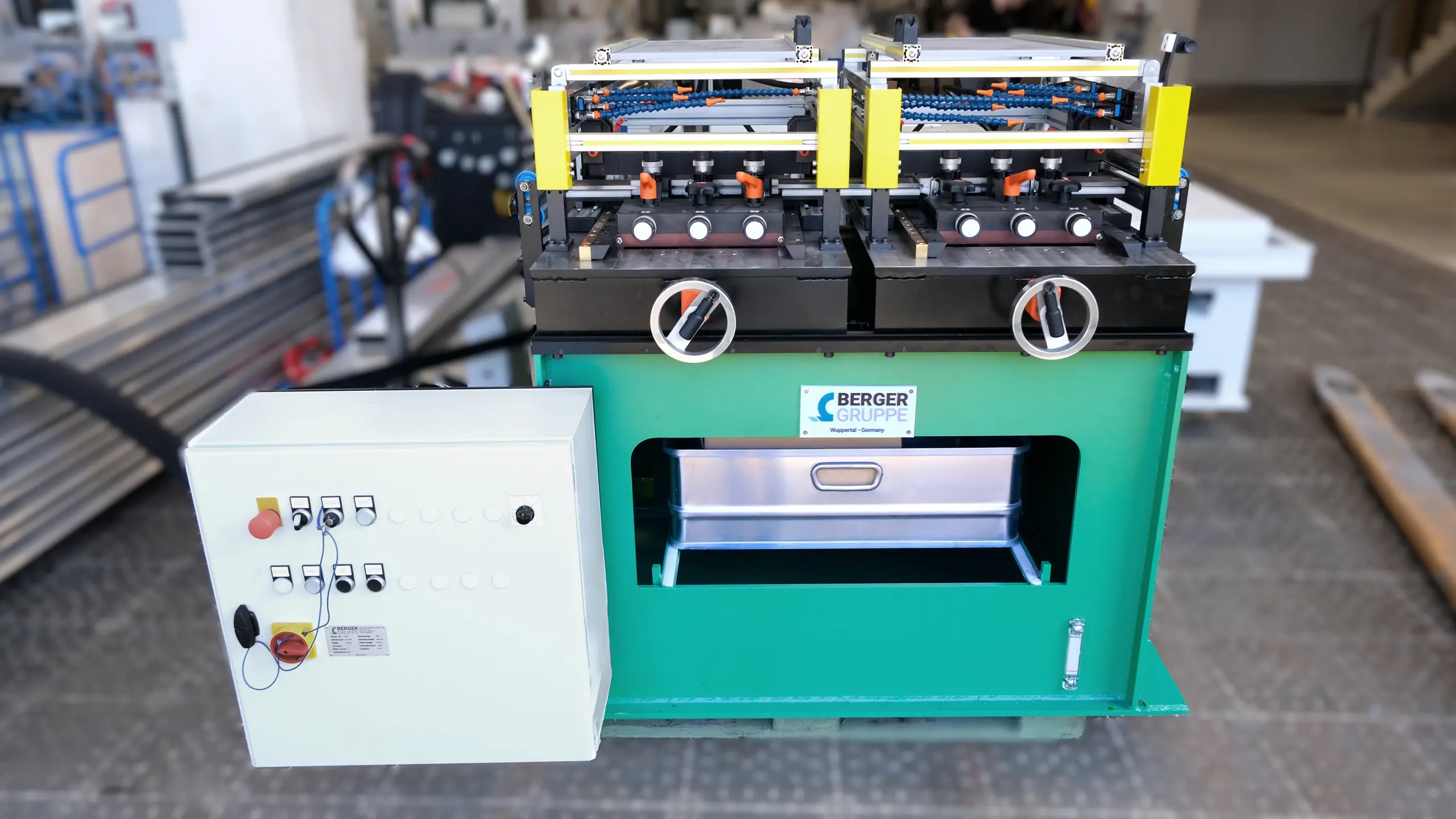
The Berger Gruppe’s modular strip edge trimming machines are integrated into tube welding lines for weld seam optimization.
They are installed between the strip feed and the profiling line. The strip edge trimming machine is often preceded by a flattening machine, which reduces the corrugation of the strip and eliminates coil curvature.
Chip-removing strip edge trimming
The process of machining strip edges makes the edges of the strips uniformly clean, straight and dimensionally accurate. They also retain their internal structure on the surface.
The edges are machined at an adjustable angle so that coatings can be removed and the V-angle for welding can be reduced as required. This prevents burrs from coming loose during further work processes such as punching or profiling.
In contrast to rolling, the material is not changed during the machining of strip edges. The structure of the material surface is retained.
Precise adjustment of the tools and a well thought-out broaching arrangement system ensure that even complex chamfers and contours are machined on the belt edge without impairing the surface structure.
Back to the solutions