


Production process of cast and forged parts
As part of the process chain for manufacturing cast and forged parts, the Berger Gruppe offers solutions for a large part of the production steps. Automation solutions as well as grinding and deburring processes are at the core of the product range.
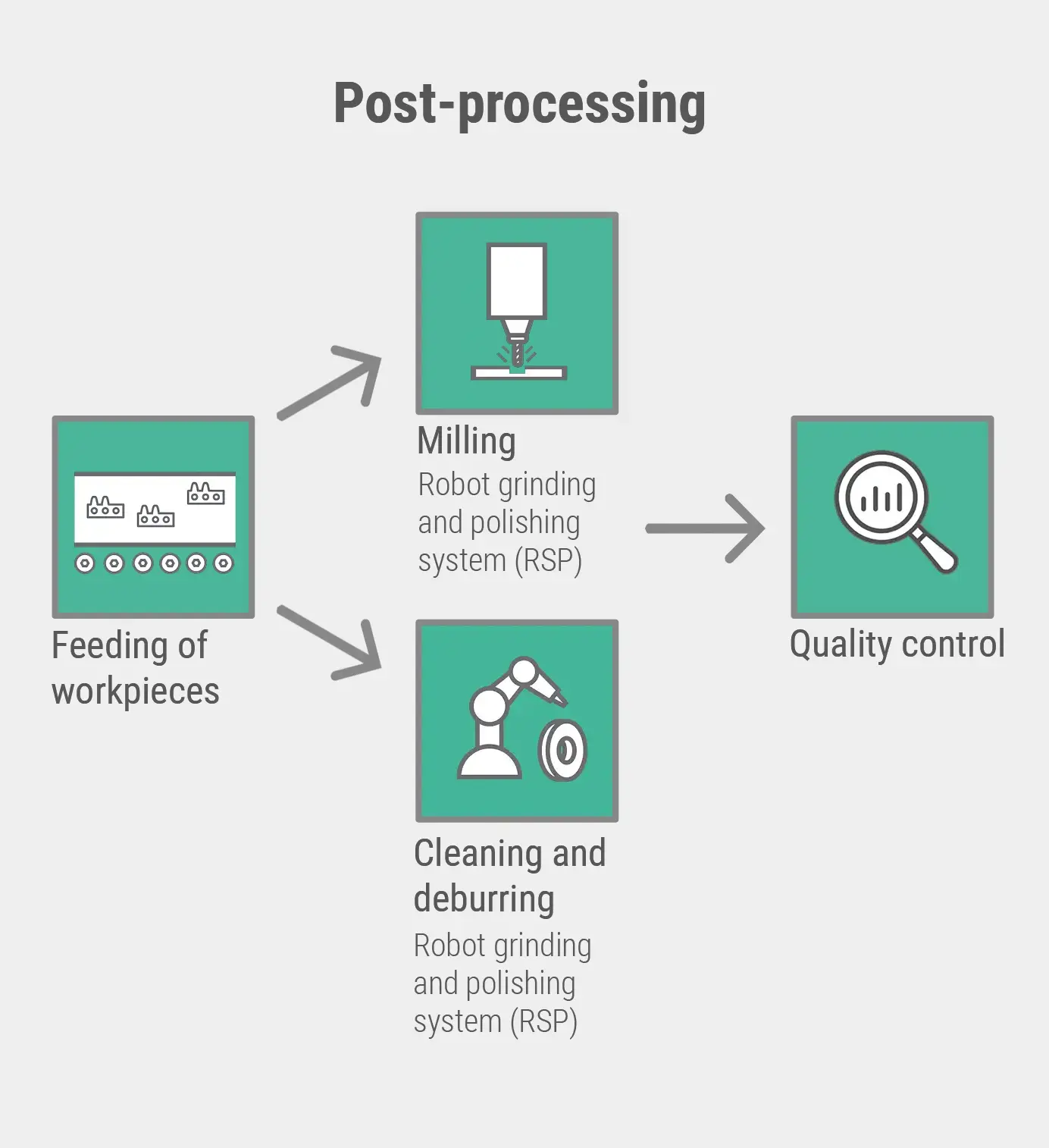
Feeding and removal of workpieces
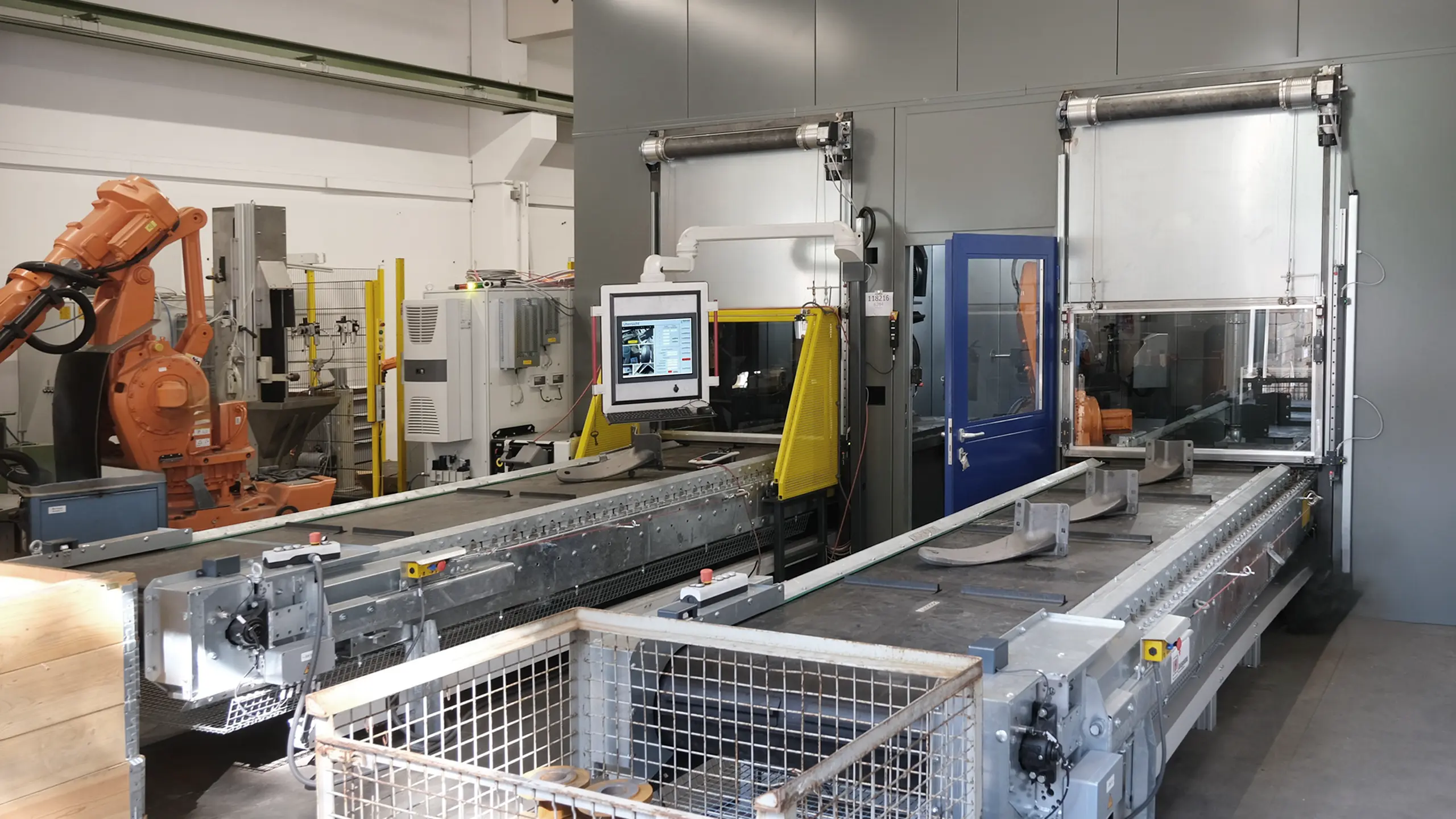
The workpieces are fed in via conveyor belts and removed again after processing.
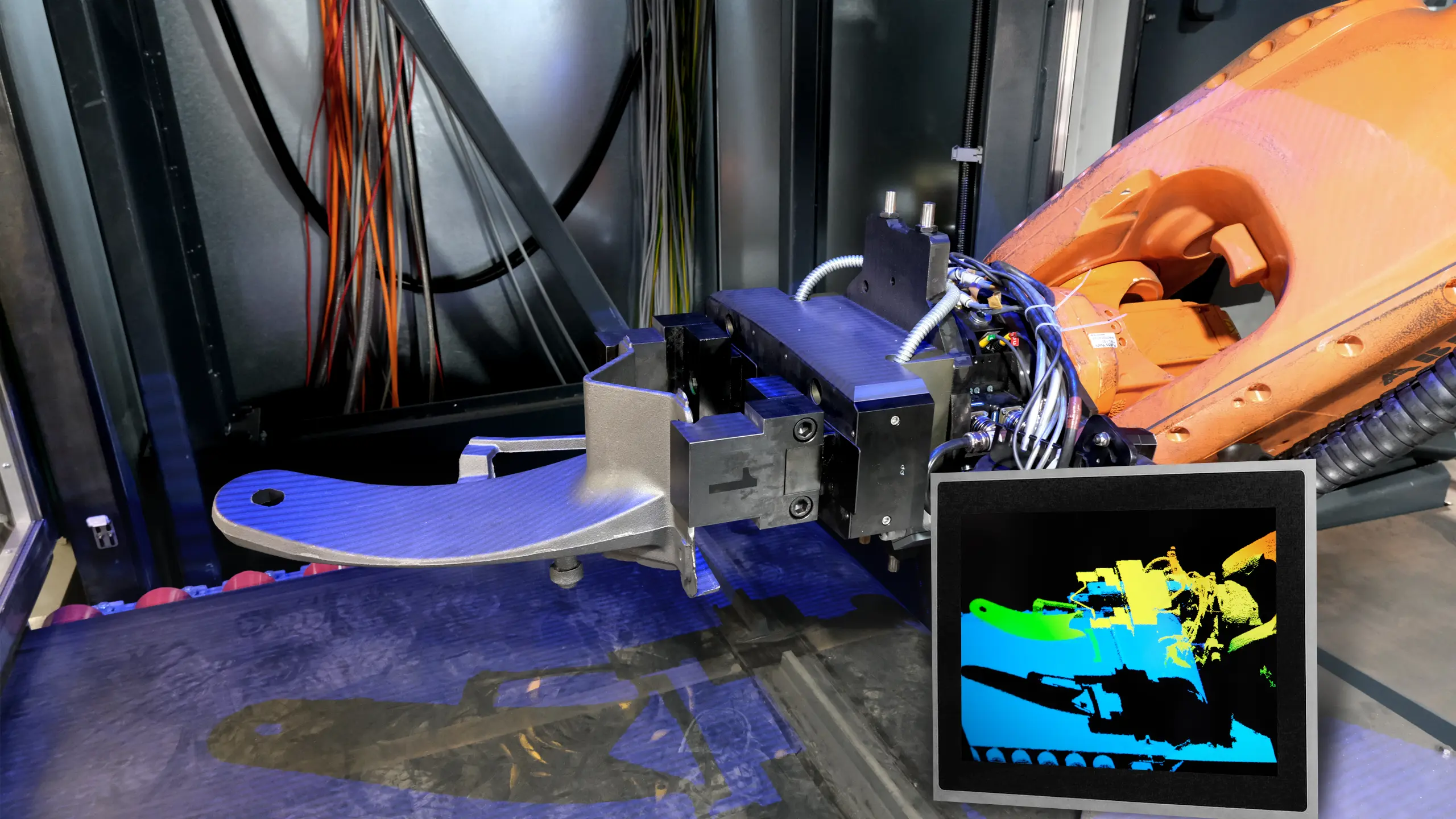
A camera measuring system integrated into the system measures the position of the workpieces
and transfers the data to the processing robot. This grips the workpiece and feeds it to the
processing station.
Milling of cast parts
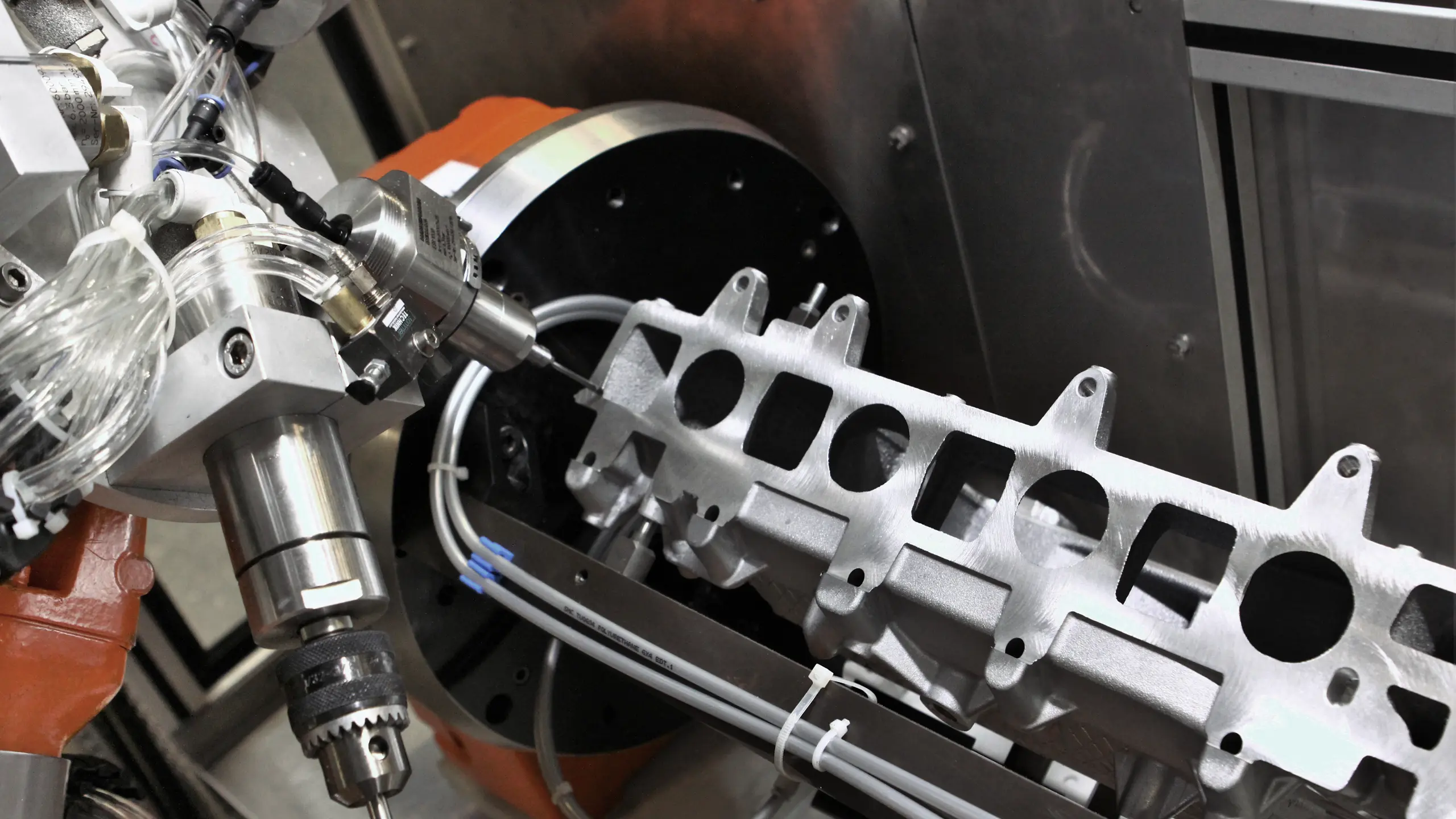
The standard robot cell shown here is designed for processing gravity die castings. The workpieces supplied by the customer are picked up via a CNC rotary table with a processing position and a loading and unloading position. This means that loading, unloading and machining can take place in parallel. The workpiece is repositioned during machining via an additional rotary axis integrated into the robot controller.
Five tools are mounted on a multi-tool head, which are selected depending on the machining operation.

Cleaning and deburring of castings
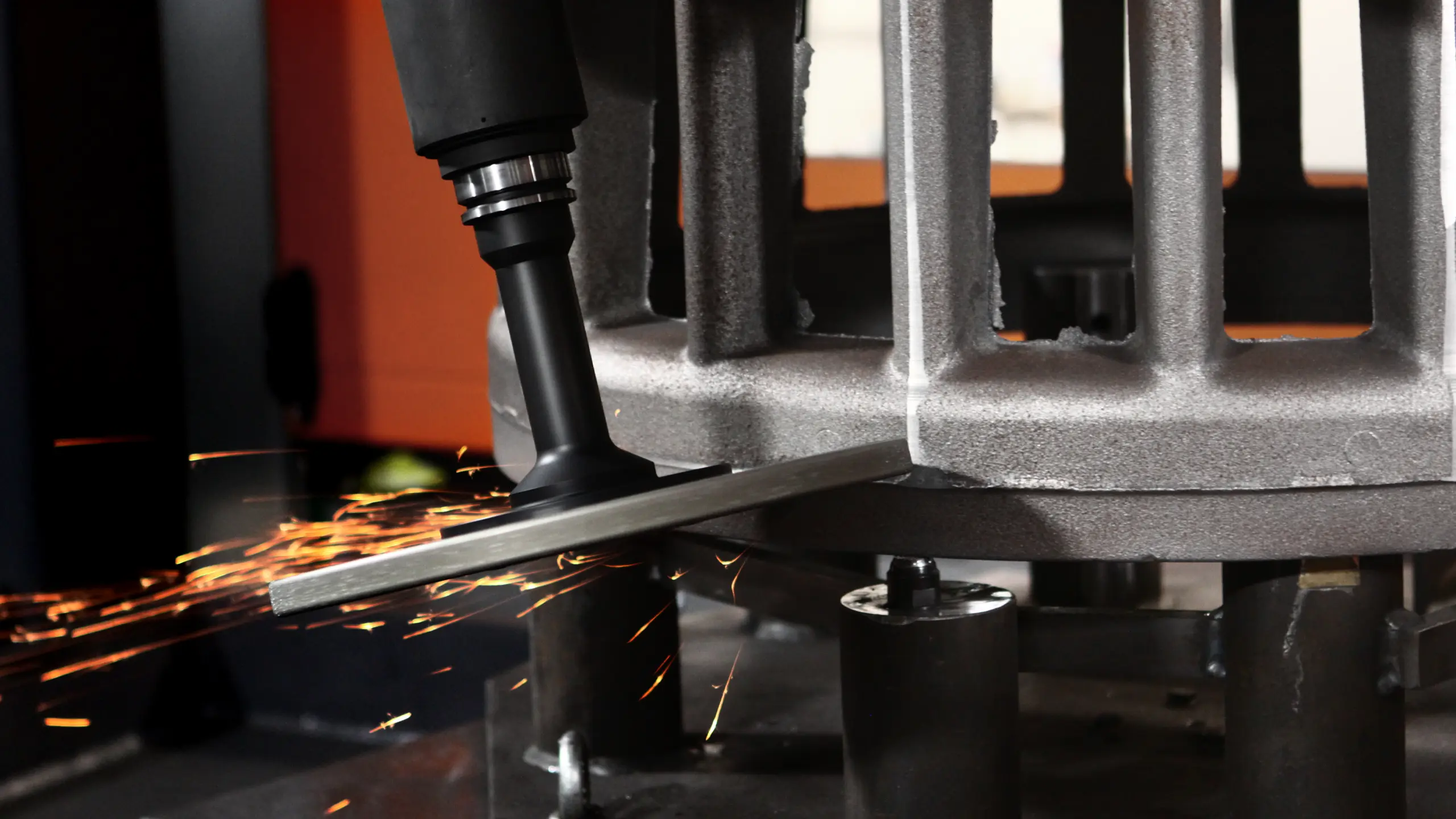
The newly developed, highly universal robot cell is designed for fettling and machining the surfaces of workpieces weighing up to 100 kg with complex geometries. The aim of the machining process is the uniform removal of at least 1 mm of material thickness from the entire surface of the workpiece to be machined. The innovative content of the process presented here lies in the combination of force-torque sensor technology with the machining of complex, 3D-defined surfaces and a constant force control orthogonal to the surface with simultaneous tool wear compensation.
The 3D design drawings of the workpieces are read in via CAM software and the necessary robot paths are programmed offline, whereby the tool paths are calculated in six or multi-axis codes. The challenge of this innovation lay in the use of abrasive tools, as not only the workpiece circumference but also the diameter of the grinding wheel changes during machining
Deburring of large-volume workpieces
The fully automated robot cell is designed for deburring large-volume workpieces – e.g. made of gray cast iron. The workpiece is positioned on a CNC rotary table for processing within the production area. The rotary table axis is fully integrated into the robot controller. The workpiece is machined using various rotating tools such as a grinding wheel or milling cutter.
A tool change is carried out depending on the machining task and takes place from a change magazine. Processing is prepared using offline programming – e.g. via RobotStudio. The robot is equipped with a force-torque sensor system so that contours can be processed almost seamlessly. Thanks to additional measurement technology, this robot cell can be offered as a turn-key solution.
Quality control of castings
With the help of cameras or mechanical probes, the workpieces can be measured before or after processing and thus influence the processing program.
Application examples:
- 3D measuring with touch probe
- 3D surveying with camera
- Compensation of workpiece tolerances through camera measuring system
- Camera measuring system with graphical interface for part measurement
Back to the solutions