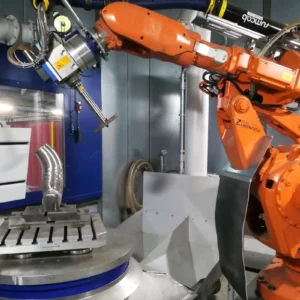


Robotic system – RSP/5F series for deburring die-cast and cast steel parts
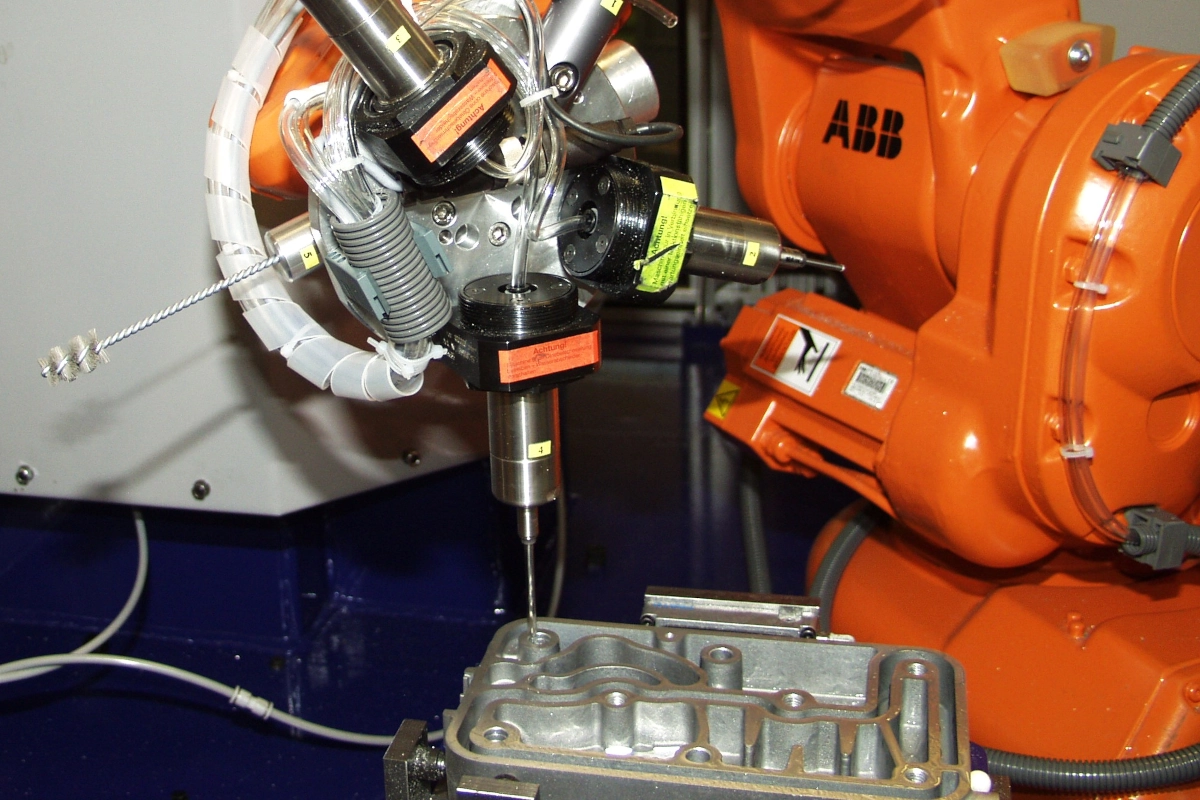
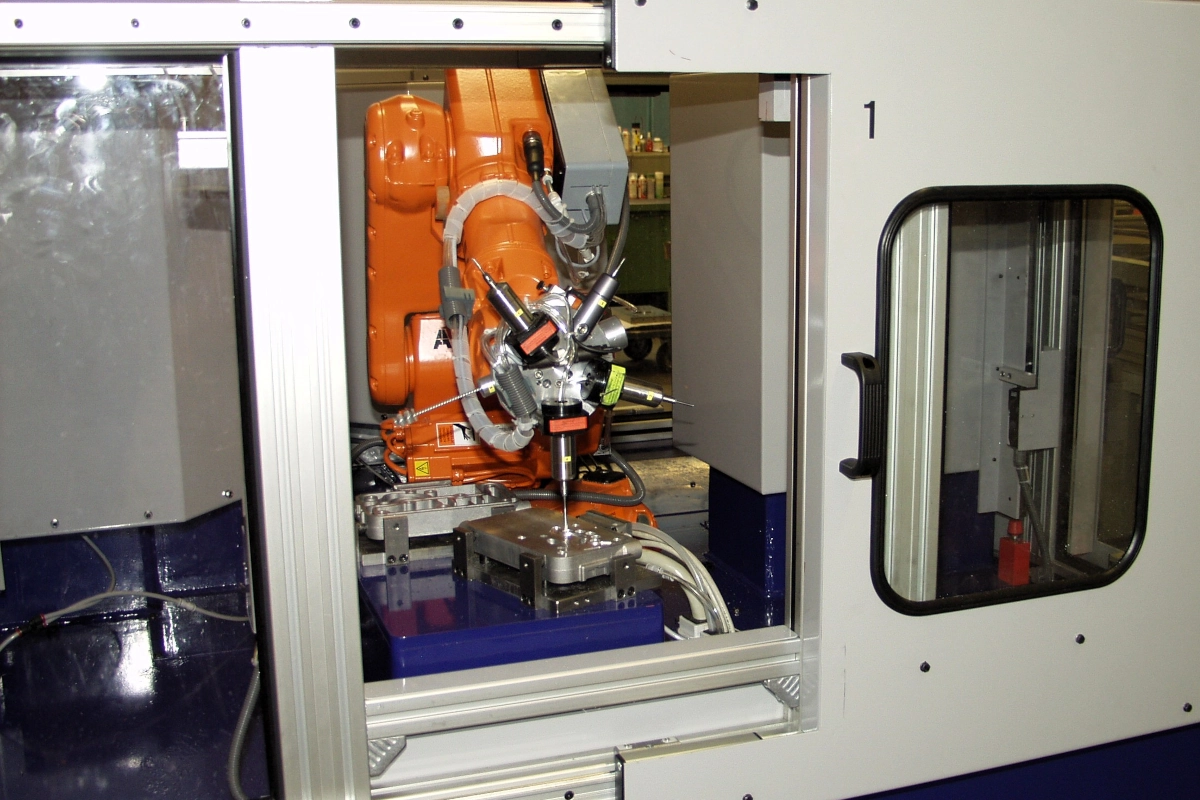
RSP/5F: MACHINING OF DIE CASTING / CAST STEEL
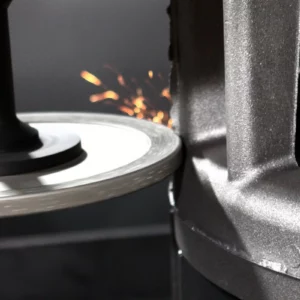
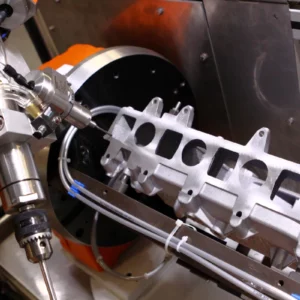
Robotic deburring of aluminum castings can be carried out using a variety of tools. Rotating tools such as milling and grinding pins, grinding flap discs or brushes are primarily used.
The tools are selected depending on the accuracy requirements, the material, the surface and the amount of material to be removed. During machining, either the tool or the workpiece can be guided.
RSP/5F: MACHINING OF DIE CASTING / CAST STEEL
Robotic deburring of aluminum castings can be performed using a variety of tools. The tools used are primarily rotary-driven tools such as milling and grinding bits, flap discs, and brushes.
The tools are selected depending on the accuracy requirements, the material, the surface and the amount of material to be removed. During machining, either the tool or the workpiece can be guided.
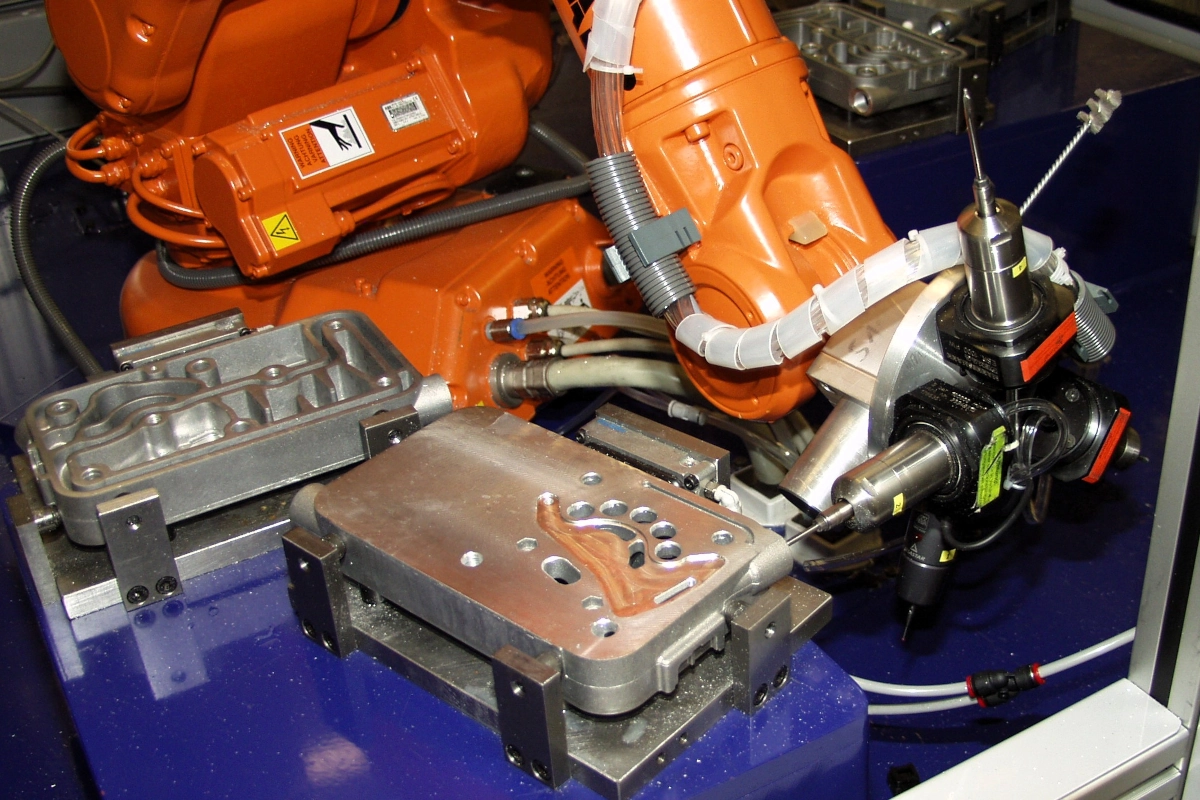
- Mounting of various tools in three pneumatically driven milling spindles and one
- Brushing spindle via tool turret head
- Tool change time: 0.4 s
- Processing the programmed curves in geometric sequence
- Shortest processing paths
- Holds up to four tools
- Measurement of complete workpieces or individual contour elements for programming and
- Checking the workpiece position in the process via integrated 3D measuring probe
- Increased tool life and improved surface finish during deburring thanks to
- Wetting with liquid from a spray can attached to the tool turret
When machining die-cast cylinder heads, for example, precise and defined deburring
is crucial. The deburred edges should be 0.3 to 0.5 mm wide to ensure maximum size of the sealing surfaces.
Special milling tools have been developed to produce these uniform and narrow deburring edges for aluminium in a reliable manner,
. The milling tools guarantee a long service life and are designed to limit penetration into the workpiece.
Offline software is supplied for programming the robot, with which drawing data is tapped and the curves to be deburred are assembled as radius and line elements.