


Production process
of household knives
As part of the process chain for manufacturing household knives, the Berger Gruppe offers solutions for a large part of the production steps.
Automation solutions and sanding processes are at the heart of the product range.
Surface and bevel grinding on knife blanks
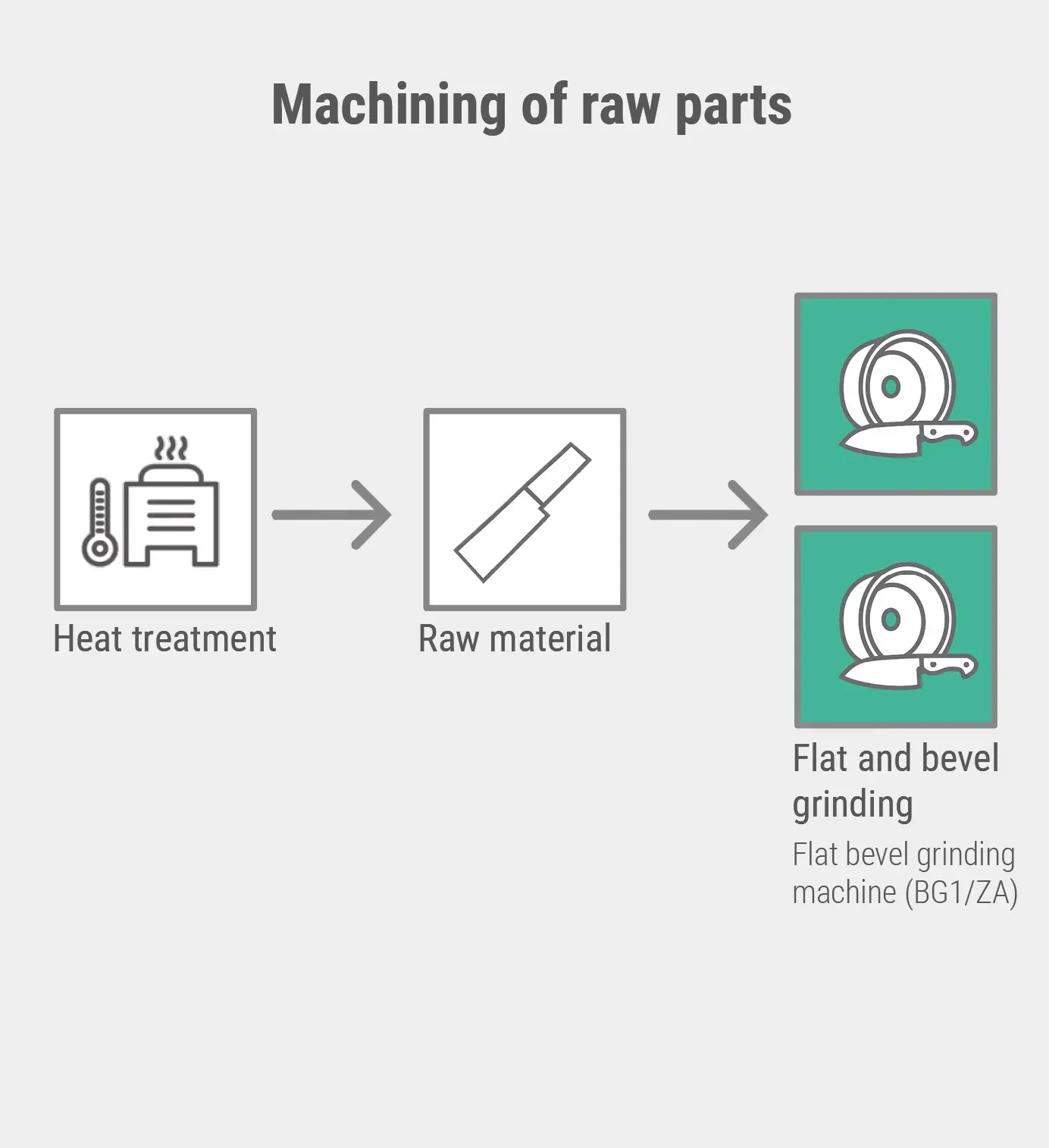
The CNC-controlled flat bevel grinding machine from the BG/ZA series is designed for the economical grinding of workpieces with simple geometries. The grinding machine is equipped with three contouring axes.
In the cutlery industry, the BG/ZA is used for grinding kebab or long knives, among other things.
- Sanding length 300-640 mm
- Mounting flange for grinding wheels 80-710 mm Ø
- Spindle drive 6.5-45 kW- Spindle with backlash-free preloaded precision bearing, designed for a peripheral speed of up to 50 m/s
The thicker the wall thickness and the smaller the pipe diameter, the greater the V-angle at which the round pipe edges meet. The cross-section to be welded, which abuts against each other, becomes smaller and smaller and therefore the area to be liquefied necessarily becomes larger.
This also means that the upsetting zone, and therefore the upsetting force, increases immediately after welding. This results in ever-increasing weld seam elevations, which have to be planed off at great expense on the upper and inner surfaces.
Back grinding on knife blades
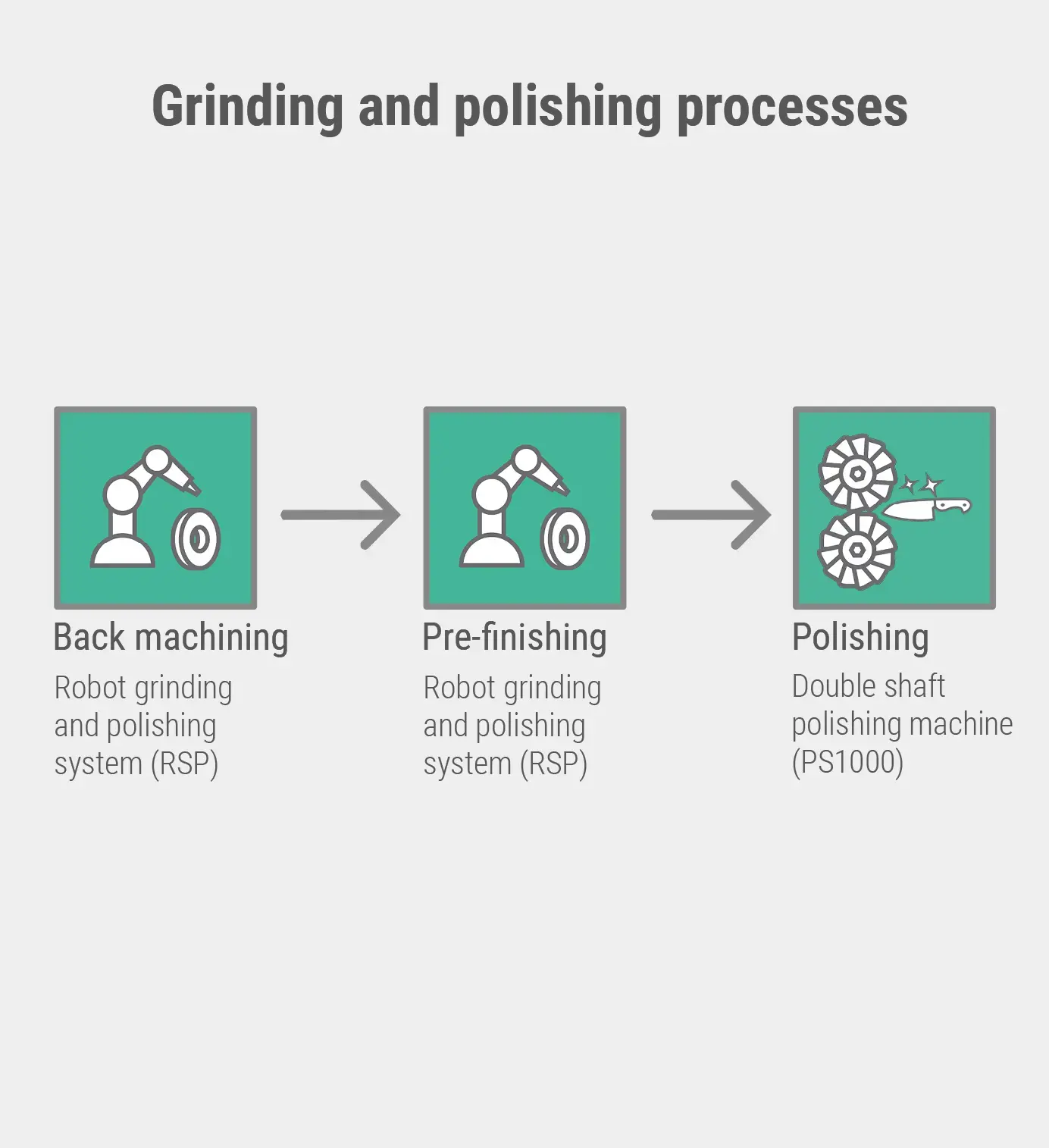
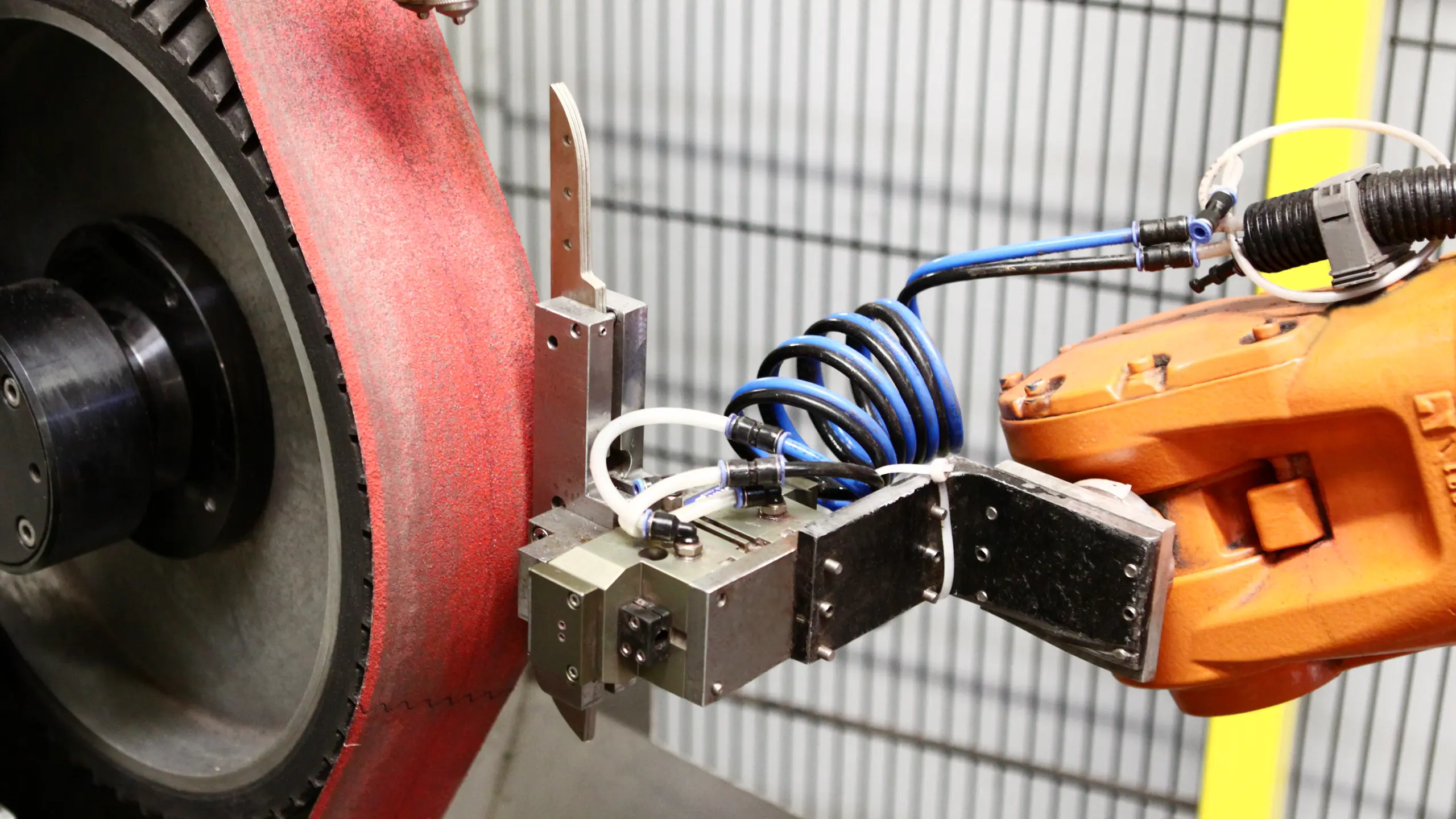
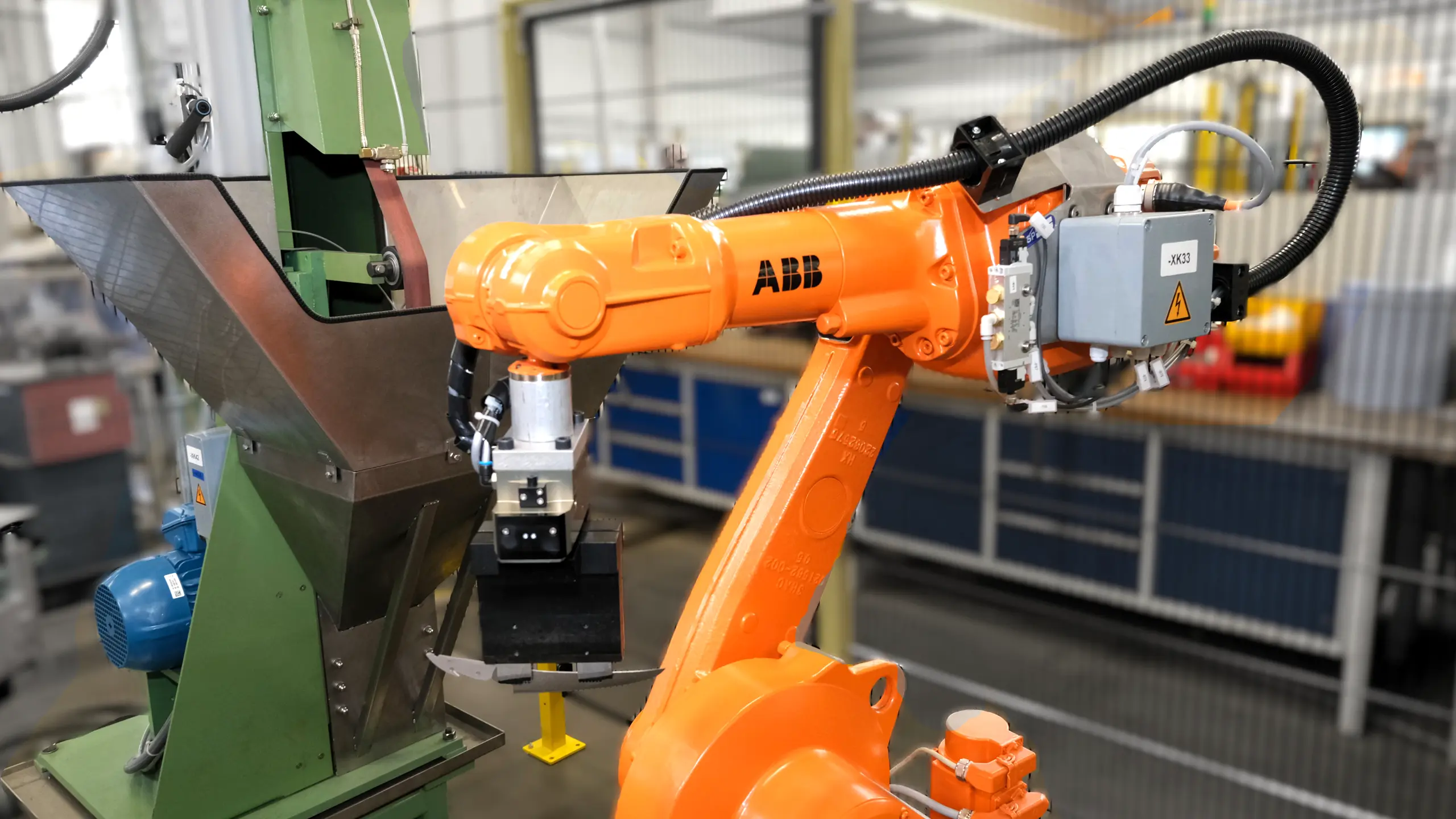
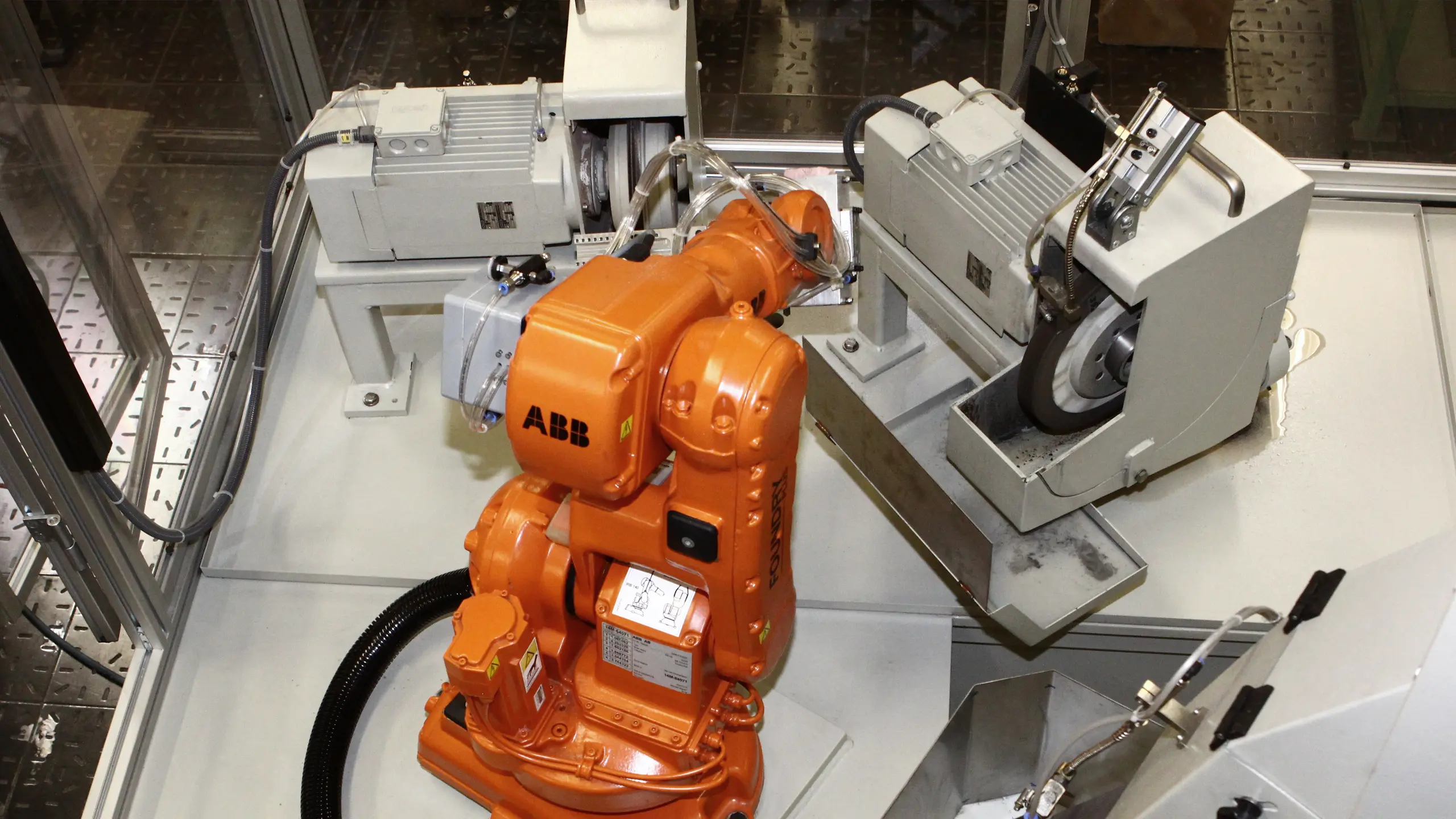
The RSP/2B/1M robot grinding station is designed for grinding and scotching knife backs and preparing knife heads. The processing station is equipped with two belt grinding stations and a magazine system.
Pre-draw on knives
The pre-grinding of knife blades using robots is a high-precision process in modern industrial knife production. Robot cells take over the grinding of the blank to determine the geometry of the cutting edge before the final fine grinding.
The knife blade is guided by the robot and ground at a belt grinding station. The workpiece is then placed in a rotary table or stacking magazine.
Processing of handles
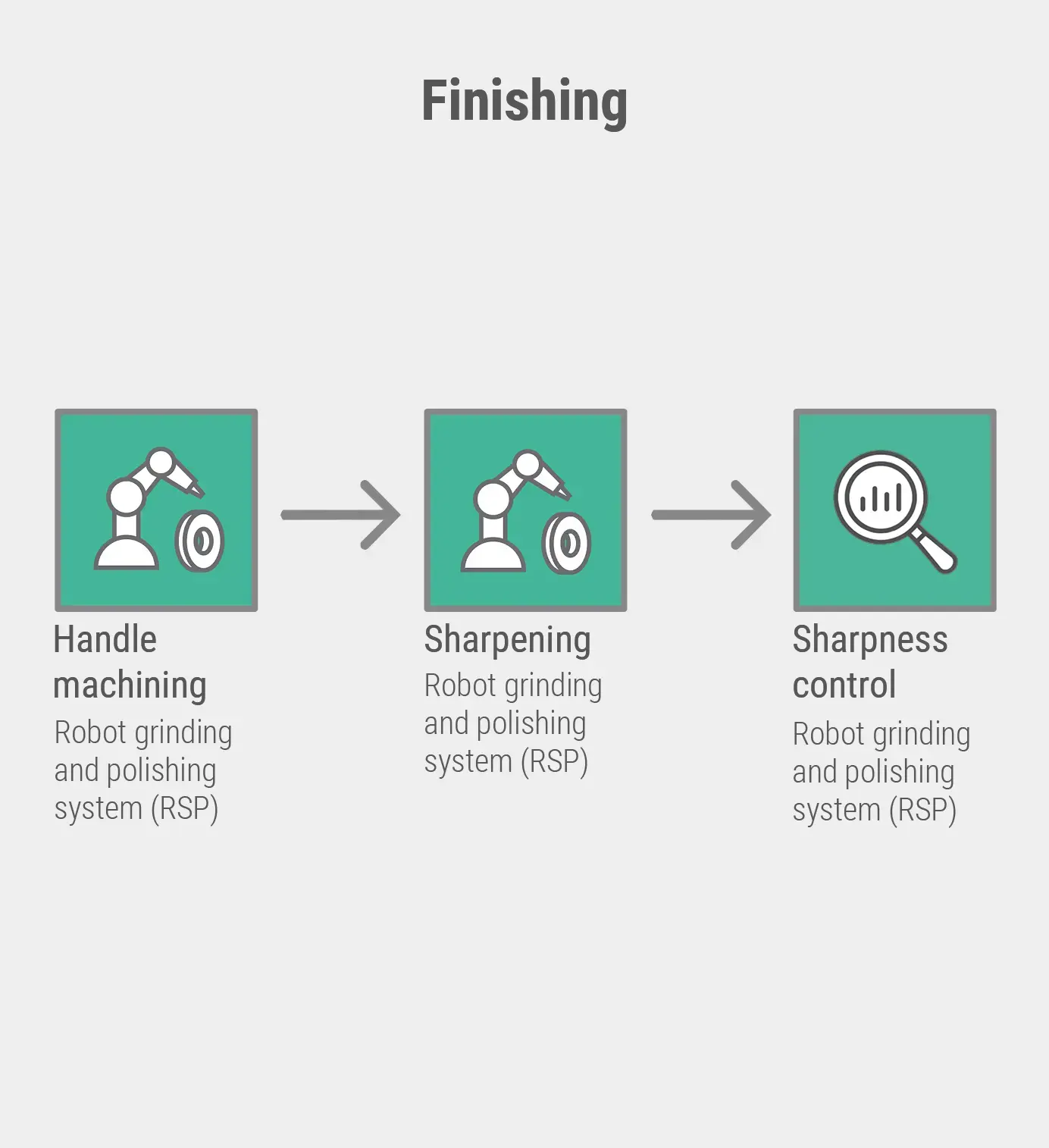
A specially configured robot cell can be used to achieve flat grinding on knife handles.
- Double-sided surface grinding of knife handles using two belt grinding stations facing each other
- Stations connected to each other by a special attachment for flat grinding on both sides
- Grinding of handles with profiled grinding wheel
Single-sided polishing stations are used for polishing knife handles. Depending on the model, equipment with a polishing wheel in widths of 100 mm or 300 mm is recommended. The polishing paste can be supplied in liquid or solid form.
Polishing household knives
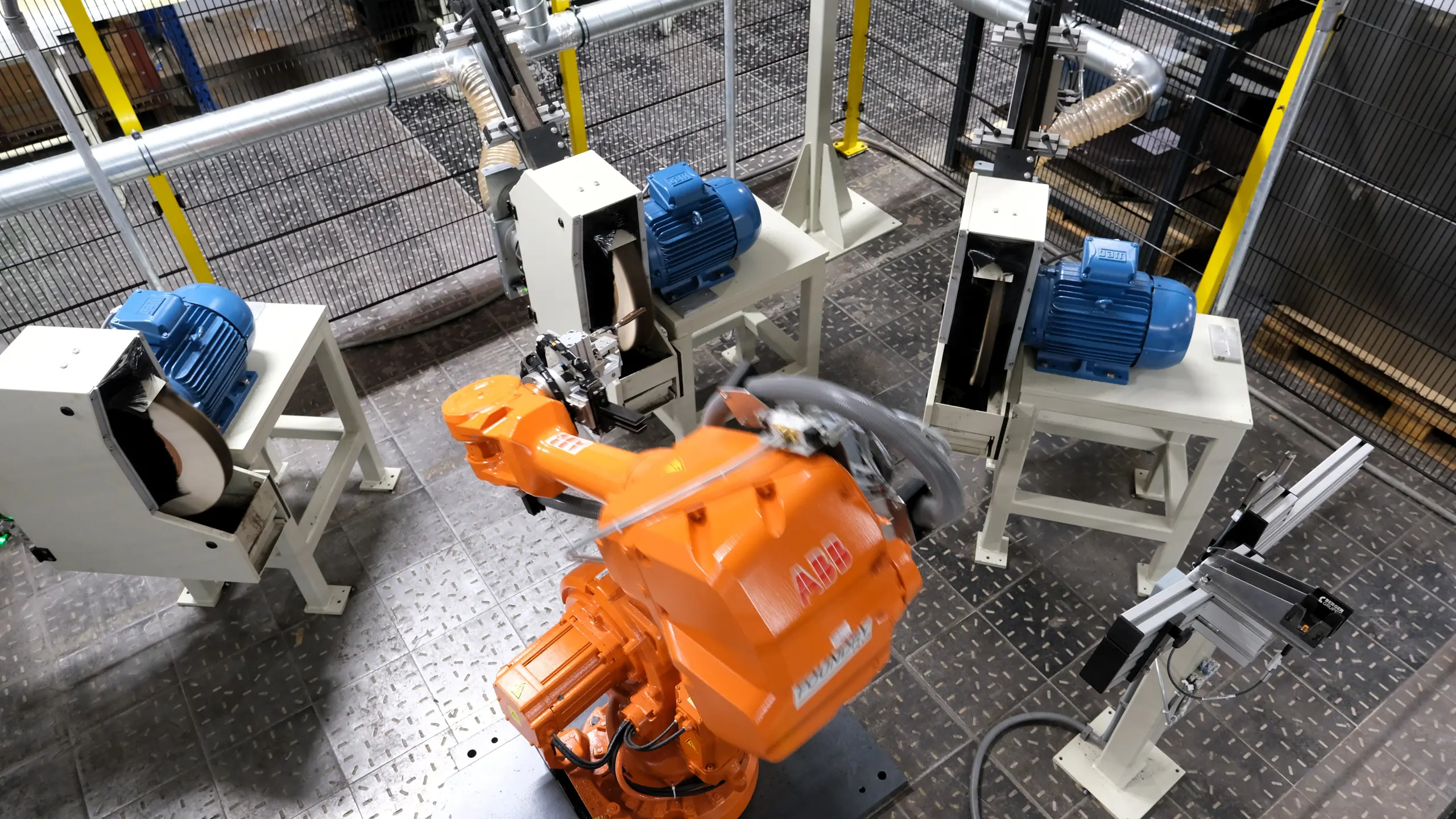
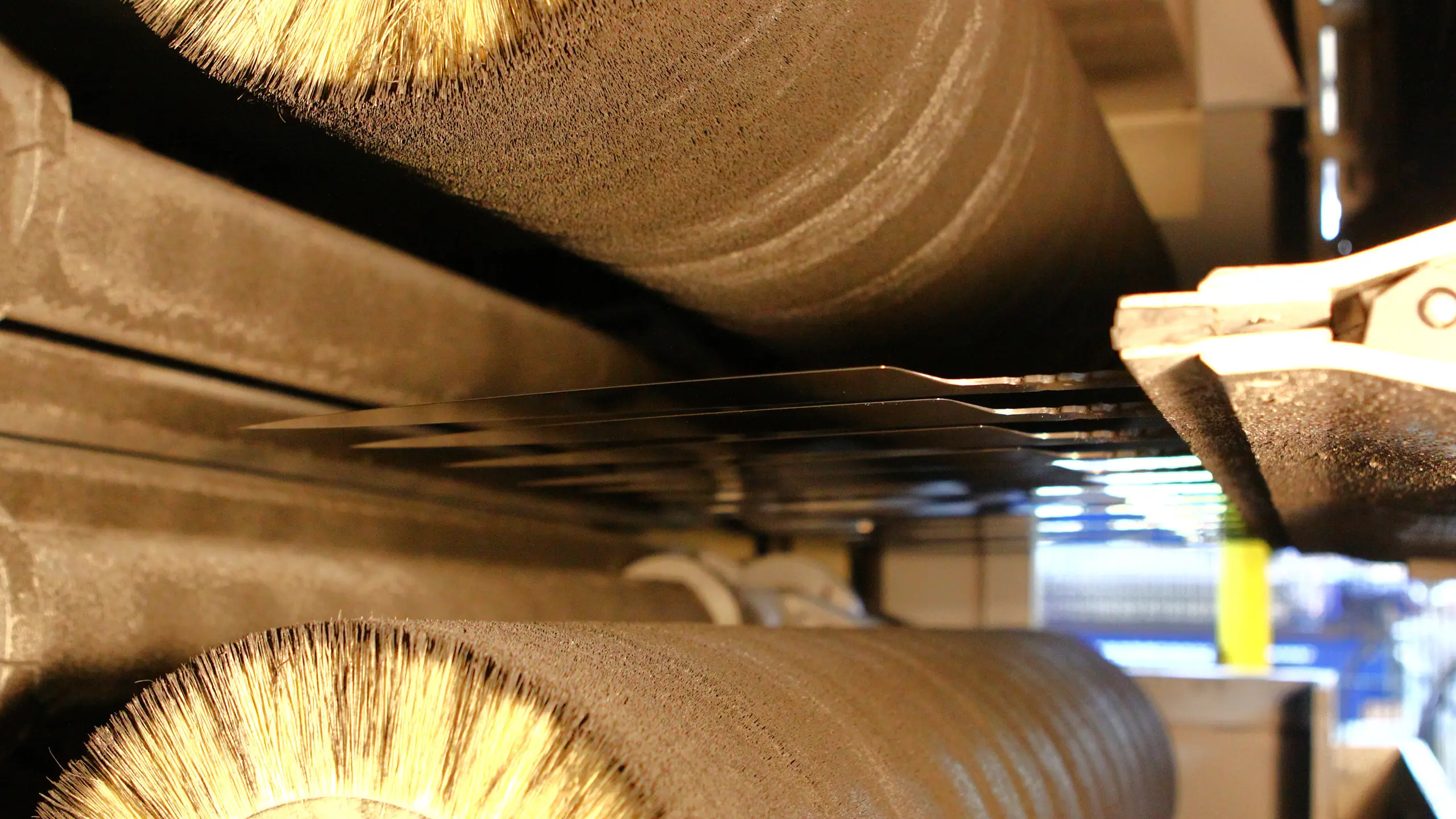
A processing cell with four processing stations, a rotary table and a loading and unloading station was put together for the pre-polishing and mirror polishing of professional knives.
The rotary table is equipped with four rotary collets.
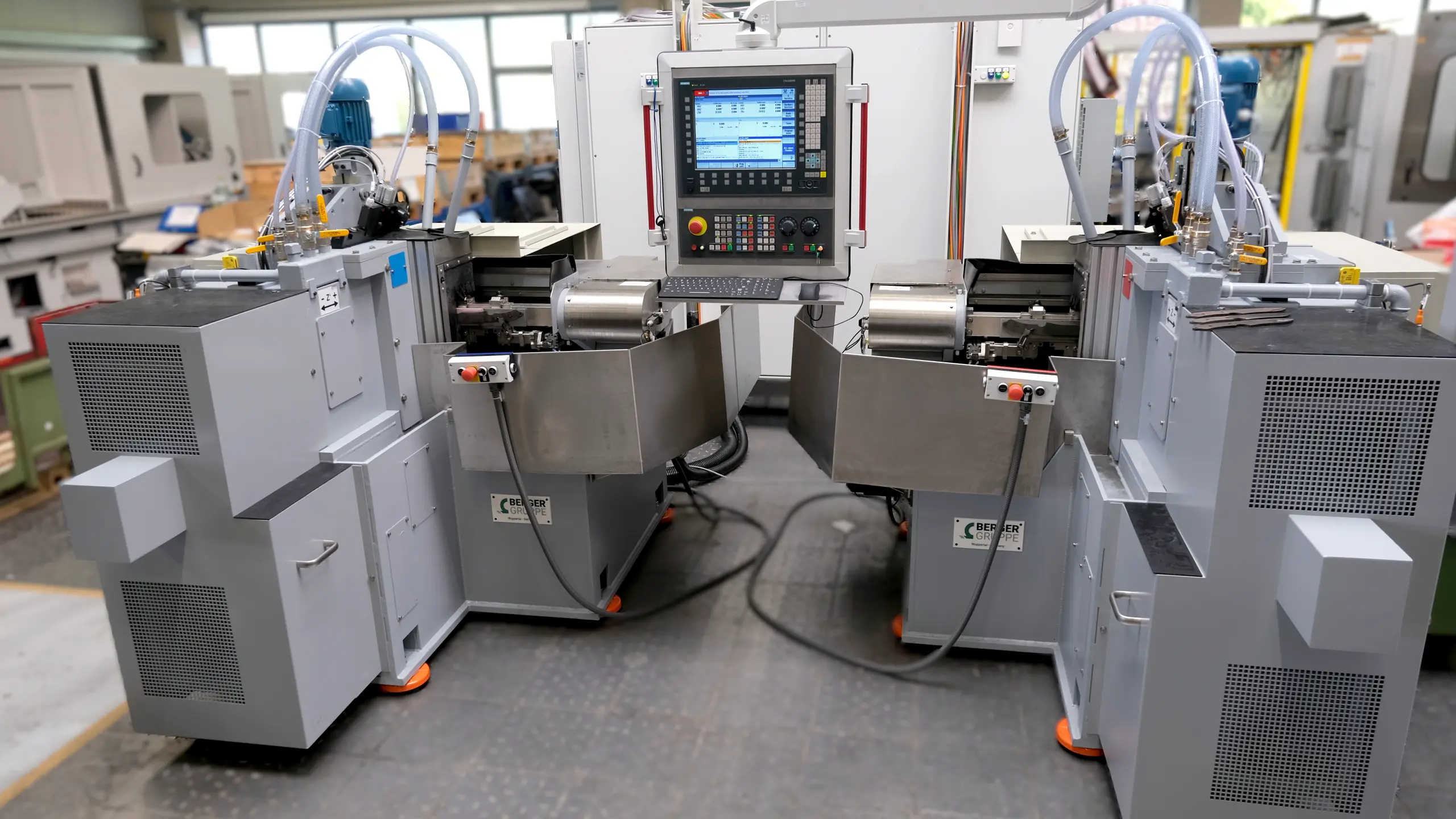
The CNC-controlled double shaft polishing machine from the PS series is equipped with a control system in which all process parameters are programmed in a user-friendly manner and stored depending on the workpiece. Thanks to a short changeover time of just a few minutes, the machine can also produce small batches.
- Infinitely variable speed-controlled polishing roller drives
- Polishing paste shot control
- Automatic correction of polishing roller wear
Sharpening with robot technology
This universally applicable concept is used to sharpen and polish cutting edges on knives and blades. The robot cell of the RSP4B/1K/1M series shown here is equipped with:
- Design optimization of the gripper: robot gripper for holding the knife in the back and on the handle
- Sharpening optionally with belt grinding or stone grinding station
- Polishing the cutting edge using a one-sided polishing station, e.g. in conjunction with a leather disk
- Measuring the workpieces
- Contour programming optimized for sharpening and polishing knives
Knife blade sharpness test
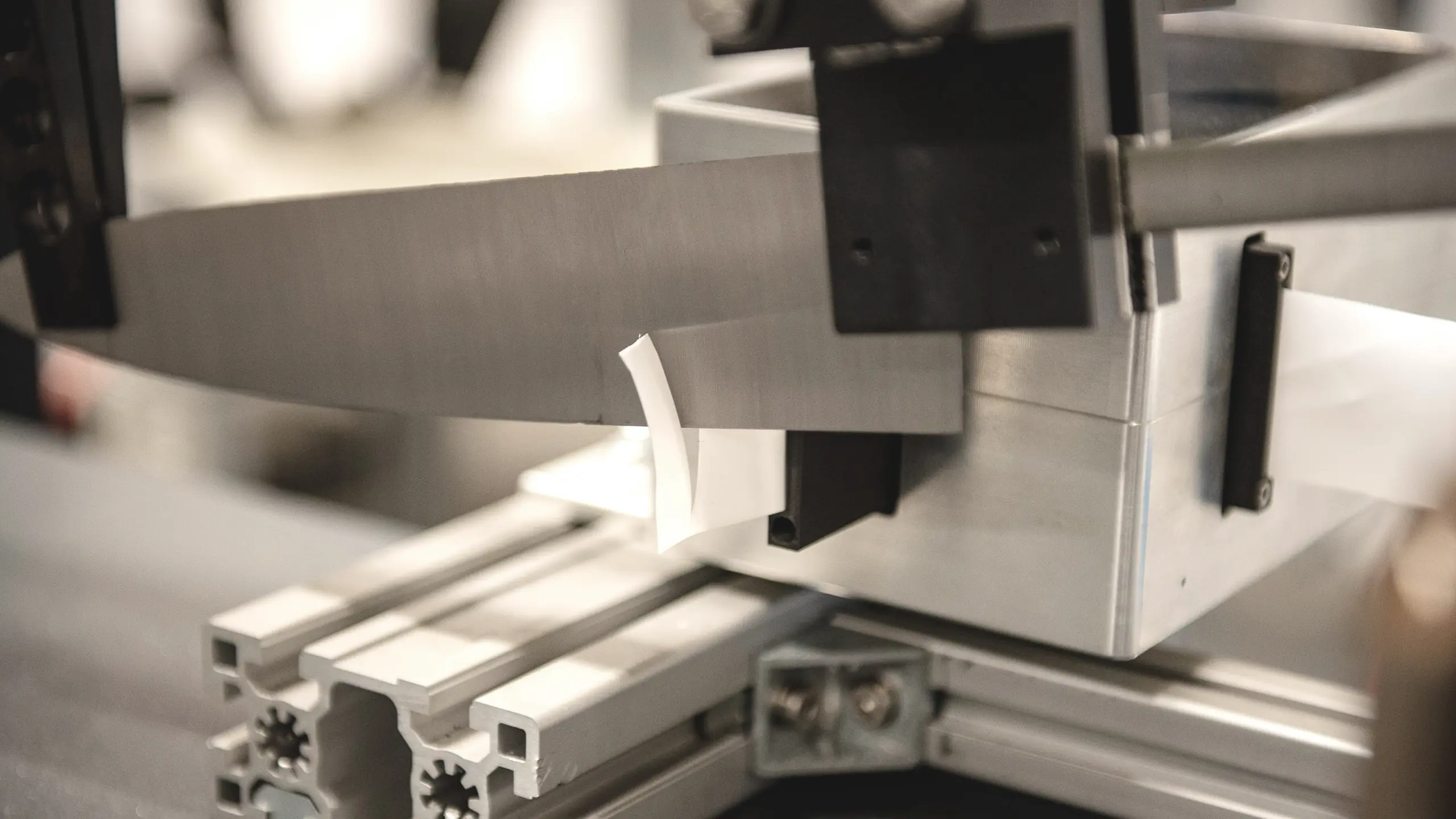
The cutting ability of the blade is checked with a foil pull cut.
- Non-destructive test
- Measures the tensile cutting ability of the cutting edge
- Measures the “sharpness” and “sharpness” properties of the “cutting edge” component and the “cutting ability” of the “cutting edge”
- Identifies grinding errors and anomalies
- Measures signal curve over a larger (or complete) section of the cutting edge (variable depending on device
variable)
Back to the solutions